
Carpet Fibres & Materials · KARATILE B2B Flooring Knowledge
Why Do Some Carpet Tiles Look Fuller? The Tufting Width Secret Behind Quality
For “Why Do Some Carpet Tiles Look Fuller? The Tufting Width Secret Behind Quality”, do not rely on one material name, number or marketing claim. Translate mate

Direct answer
What decision does this article support?
For “Why Do Some Carpet Tiles Look Fuller? The Tufting Width Secret Behind Quality”, do not rely on one material name, number or marketing claim. Translate material names and marketing language into parameters that can be checked in data sheets, samples and reports. The decision must trace to project conditions, samples and product-specific evidence.
This guide is for designers, quality/EHS teams, procurement working together during comparison, project review or pre-delivery checks. Use it with the actual zones, traffic, schedule, budget and available documents.
Translate material names and marketing language into parameters that can be checked in data sheets, samples and reports.Ready for project review
Key takeaways
- 01
When evaluating “Why Do Some Carpet Tiles Look Fuller? The Tufting Width Secret Behind Quality”, first document the zones, traffic, schedule and maintenance ass
- 02
Products with the same material name can differ through construction, formulation and process control.
- 03
A higher number is not automatically a better fit; context and maintenance matter.
- 04
Every product-level conclusion should trace to the relevant sample and document.
Answer blocks
Turn the core question into actionable answers
What should be checked first for “Why Do Some Carpet Tiles Look Fuller? The Tufting Width Secret Behind Quality”?
Confirm the relevant zones, intensity, schedule, budget and maintenance conditions, then verify each conclusion against physical samples, the exact data sheet and valid evidence.
How should a data sheet be read?
Review yarn/colouration, pile, backing, format, mass information and test methods in layers, tied to the exact product code.
What should sample review include?
Inspect face, backing, edges, thickness, joins, direction and batch, with a small layout mock-up where appropriate.
When shopping for office carpet tile, color and price are usually the first things buyers notice. But on the manufacturing floor, one critical factor determines the final quality of the product: tufting width.
Specifically, the key question is this: Does the carpet reach its final dimensions through natural thermal shrinkage after backing, or does it rely on a secondary stretching process to hit the target size?
Two Processes, Two Outcomes
At KARATILE, our carpet tiles are woven at roughly 2.06m to 2.07m wide. After backing and heat setting, they naturally settle and stabilize at 2.03m to 2.04m.
Why take this approach?
Because once the yarn undergoes thermal shrinkage, it packs together more tightly, giving the carpet surface a denser, fuller body. Think of it like baking: the same dough, when left to rise naturally, produces a loaf with a tight, substantial crumb. Stretch that same dough by force and you get a larger surface area, but the internal structure ends up loose and airy.
The same logic applies to carpet tile production.
How Width Affects Quality
Some manufacturers use a stretching (stentering) process after backing to hit target dimensions. While the specs check out on paper, the yarn spacing gets pulled apart in the process. These products may look identical in size, but they fall short on density, texture definition, and overall feel.
The difference becomes especially obvious with:
Gradation and ombre designs
Sharp geometric patterns with strong linear elements
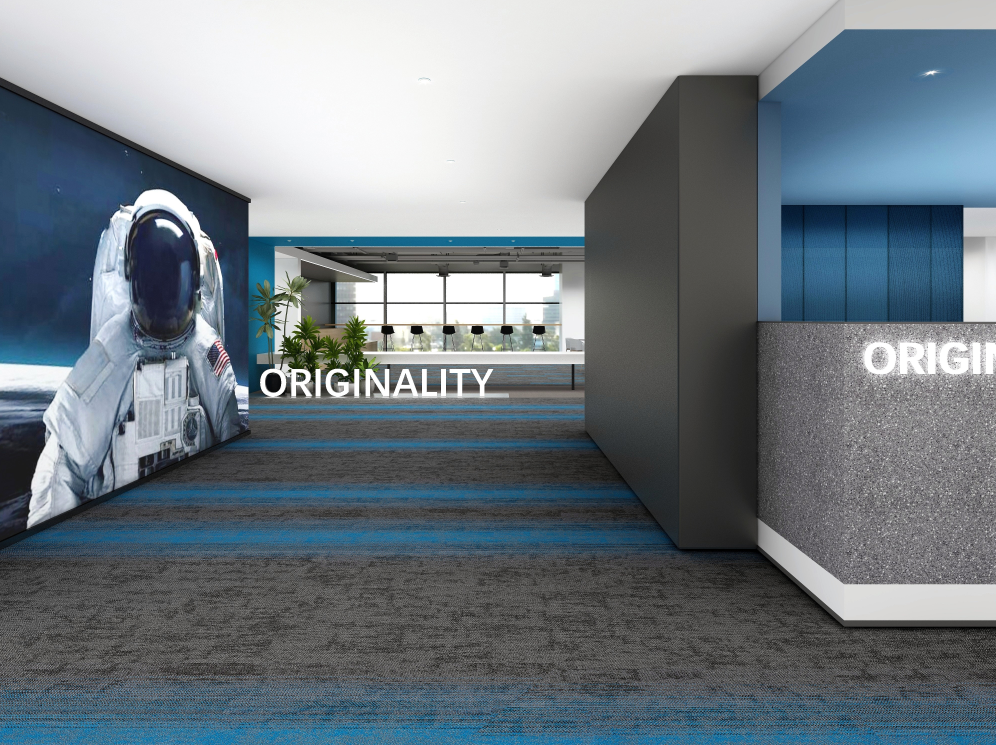
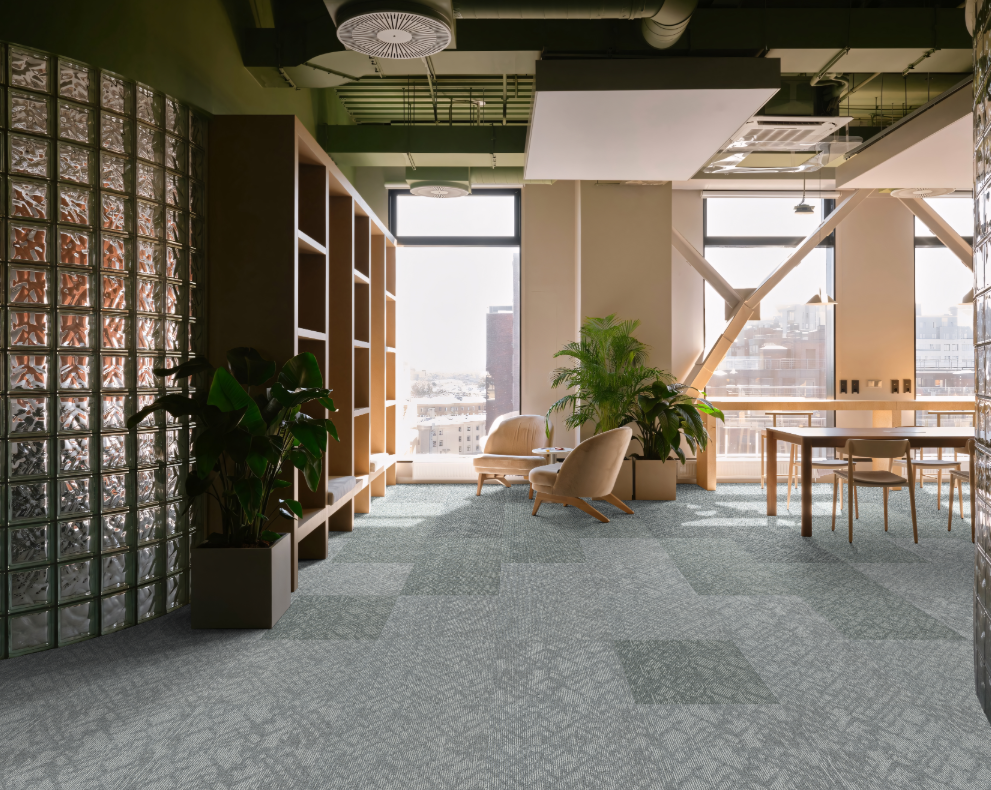
Beyond aesthetics, a denser tufting width means stronger mutual support between yarn fibers. Under heavy foot traffic, a compact carpet face resists crushing, fuzzing, and fiber pull-out far better—directly extending the product's service life.
Width Is More Than a Number
In short, tufting width might seem like a simple dimensional spec, but it directly impacts how a carpet looks, feels, and performs over time.
At KARATILE, our standard is straightforward: A proper carpet width isn't just about hitting the target measurement—it's about maintaining a full, dense, and stable surface after backing and thermal stabilization.
That's the benchmark we hold ourselves to, every single time.
For procurement review
Decision comparison
| Layer | Question answered | Procurement evidence |
|---|---|---|
| Yarn/dyeing | Colour, soil response and appearance retention | Material declaration and tests |
| Pile | Comfort, appearance and traffic fit | Construction, pile height and density |
| Backing | Dimensional stability, feel and installation | Backing composition and application notes |
| Finished tile | Safety, durability and environmental profile | Product-specific data sheet and reports |
Claim → Evidence
How claims map to evidence
ClaimOne material is inherently more durable
EvidenceMaterial name is insufficient; use construction, context and product-specific tests
ClaimThe product has a stated environmental profile
EvidenceValid test/declaration for the exact product and version
ClaimThe sample represents delivered goods
EvidenceApproved-sample ID, batch/tolerance agreement and receipt inspection
When product-specific evidence is unavailable, retain the verification method and boundary instead of presenting an assumption as fact.
Process map
From question to delivery
- 01Define useTraffic, castors, cleaning and life
- 02Break down constructionYarn, pile, backing and format
- 03Check evidenceMethod, sample and product scope
- 04Validate in contextMock-up and operating limits
Retain samples, specifications or approval records at every step so decisions survive the handoff from design to procurement and installation.
FAQ
Frequently asked questions
What should be checked first for “Why Do Some Carpet Tiles Look Fuller? The Tufting Width Secret Behind Quality”?
Confirm the relevant zones, intensity, schedule, budget and maintenance conditions, then verify each conclusion against physical samples, the exact data sheet and valid evidence.
Why can products using the same material perform differently?
Yarn grade, twist or coloration, pile construction, density, backing and process control all affect the finished tile.
Is a higher number always better?
No. Specifications must match traffic, maintenance, comfort, budget and site conditions; over-specification wastes cost and mismatch creates failures.
How do I verify a test report applies to my project?
Match the sample name, product code, construction, client, method, date and result to the product being supplied.
Evidence and further reading
Sources
China official / standards
- GB 18586—2026 国家标准信息standard
International research / technical sources
References support standard status, industry methods or design context and do not endorse every third-party claim.
Continue reading
More from this decision path
 Carpet and Indoor Air Quality: Dust Control, Cleaning and Evidence
 Large-Format Soft-Back Carpet Tile: Design Fit and Delivery Considerations
 Large-Format Carpet Tile: Construction, Format and Application Guide
Internal knowledge links
From knowledge to products and applications
Next step
Request the exact data sheet and sample
Share project city, area, zones, schedule, budget and reference images for a response using the same decision model.