
Indoor Environment & Health · KARATILE B2B Flooring Knowledge
Carpet and Indoor Air Quality: Dust Control, Cleaning and Evidence
For “Carpet and Indoor Air Quality: Dust Control, Cleaning and Evidence”, do not rely on one material name, number or marketing claim. Translate material names
Direct answer
What decision does this article support?
For “Carpet and Indoor Air Quality: Dust Control, Cleaning and Evidence”, do not rely on one material name, number or marketing claim. Translate material names and marketing language into parameters that can be checked in data sheets, samples and reports. The decision must trace to project conditions, samples and product-specific evidence.
This guide is for designers, quality/EHS teams, procurement working together during comparison, project review or pre-delivery checks. Use it with the actual zones, traffic, schedule, budget and available documents.
Translate material names and marketing language into parameters that can be checked in data sheets, samples and reports.Ready for project review
Key takeaways
- 01
When evaluating “Carpet and Indoor Air Quality: Dust Control, Cleaning and Evidence”, first document the zones, traffic, schedule and maintenance assumptions.
- 02
Products with the same material name can differ through construction, formulation and process control.
- 03
A higher number is not automatically a better fit; context and maintenance matter.
- 04
Every product-level conclusion should trace to the relevant sample and document.
Answer blocks
Turn the core question into actionable answers
What should be checked first for “Carpet and Indoor Air Quality: Dust Control, Cleaning and Evidence”?
Confirm the relevant zones, intensity, schedule, budget and maintenance conditions, then verify each conclusion against physical samples, the exact data sheet and valid evidence.
How should a data sheet be read?
Review yarn/colouration, pile, backing, format, mass information and test methods in layers, tied to the exact product code.
What should sample review include?
Inspect face, backing, edges, thickness, joins, direction and batch, with a small layout mock-up where appropriate.
For decades, carpet has been unfairly labeled as a magnet for indoor dust and pollutants. Yet mounting evidence from international research tells a different story: with proper maintenance, carpet doesn't worsen air quality—it actively helps control airborne particles and create healthier indoor environments.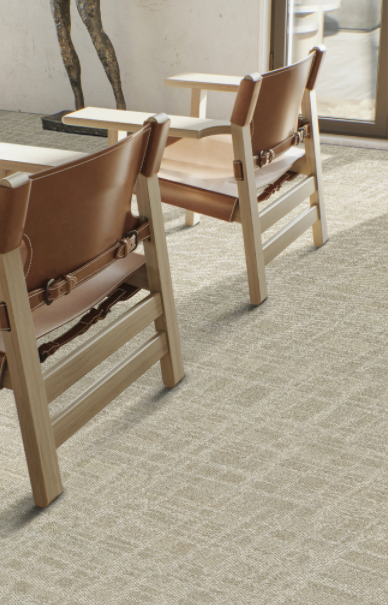
The Science of Particle Capture
Carpet fibers function as a passive filtration system. The pile traps floating dust, pollen, dander, and mold spores, preventing them from recirculating through foot traffic and air currents. This "lock-in" effect eliminates the secondary dust resuspension common with hard surfaces.
Key findings from global research:
-EPA & CRI Studies: The U.S. Environmental Protection Agency and Carpet and Rug Institute confirm that carpet effectively adsorbs and retains particulate matter, keeping it out of the breathing zone.
-European Research: A study published in *Indoor Air* journal found airborne dust concentrations in rooms with hard flooring were approximately double those in carpeted spaces.
-Japanese Validation: Testing by the Japan Society for Indoor Environment demonstrated significantly lower inhalable dust levels when people walked on carpet versus hard floors.
Why "Lock-In" Beats "Pile-Up"
The mechanism isn't accumulation—it's stabilization. Carpet converts floating particles into attached states, enabling concentrated removal through cleaning rather than constant redistribution.
Maintenance Best Practices
Realizing these benefits requires a structured care routine:
- Vacuum 1-2 times weekly with HEPA-filter equipment
- Schedule professional deep cleaning every 6-12 months
How KARATILE Supports Clean Air Goals
Our carpet tile solutions are engineered for maintainability:
-Dense Pile Construction: Maximizes particle retention while enabling efficient vacuuming
-Stain-Resistant Treatment: Slows liquid penetration for rapid response cleaning
-Low-Emission Materials: Rigorous TVOC control prevents material off-gassing
-Modular Design: Office carpet tile format allows targeted replacement, reducing lifecycle costs and waste
The Bottom Line
Scientific understanding paired with disciplined maintenance unlocks carpet's environmental potential. KARATILE delivers professional-grade carpet and carpet tile products backed by practical care guidance—helping facility managers and designers build demonstrably healthier, cleaner indoor spaces.
For procurement review
Decision comparison
| Layer | Question answered | Procurement evidence |
|---|---|---|
| Yarn/dyeing | Colour, soil response and appearance retention | Material declaration and tests |
| Pile | Comfort, appearance and traffic fit | Construction, pile height and density |
| Backing | Dimensional stability, feel and installation | Backing composition and application notes |
| Finished tile | Safety, durability and environmental profile | Product-specific data sheet and reports |
Claim → Evidence
How claims map to evidence
ClaimOne material is inherently more durable
EvidenceMaterial name is insufficient; use construction, context and product-specific tests
ClaimThe product has a stated environmental profile
EvidenceValid test/declaration for the exact product and version
ClaimThe sample represents delivered goods
EvidenceApproved-sample ID, batch/tolerance agreement and receipt inspection
When product-specific evidence is unavailable, retain the verification method and boundary instead of presenting an assumption as fact.
Process map
From question to delivery
- 01Define useTraffic, castors, cleaning and life
- 02Break down constructionYarn, pile, backing and format
- 03Check evidenceMethod, sample and product scope
- 04Validate in contextMock-up and operating limits
Retain samples, specifications or approval records at every step so decisions survive the handoff from design to procurement and installation.
FAQ
Frequently asked questions
What should be checked first for “Carpet and Indoor Air Quality: Dust Control, Cleaning and Evidence”?
Confirm the relevant zones, intensity, schedule, budget and maintenance conditions, then verify each conclusion against physical samples, the exact data sheet and valid evidence.
Why can products using the same material perform differently?
Yarn grade, twist or coloration, pile construction, density, backing and process control all affect the finished tile.
Is a higher number always better?
No. Specifications must match traffic, maintenance, comfort, budget and site conditions; over-specification wastes cost and mismatch creates failures.
How do I verify a test report applies to my project?
Match the sample name, product code, construction, client, method, date and result to the product being supplied.
Evidence and further reading
Sources
China official / standards
- GB 18586—2026 国家标准信息standard
International research / technical sources
References support standard status, industry methods or design context and do not endorse every third-party claim.
Continue reading
More from this decision path
 Large-Format Soft-Back Carpet Tile: Design Fit and Delivery Considerations
 Large-Format Carpet Tile: Construction, Format and Application Guide
 Recycled Textile Soft Backing: Construction and Project Considerations
Internal knowledge links
From knowledge to products and applications
Next step
Request the exact data sheet and sample
Share project city, area, zones, schedule, budget and reference images for a response using the same decision model.