
Carpet Fibres & Materials · KARATILE B2B Flooring Knowledge
How to Choose Carpet Tiles for Different Office Areas
For “How to Choose Carpet Tiles for Different Office Areas”, do not rely on one material name, number or marketing claim. Build a selection checklist that desig

Direct answer
What decision does this article support?
For “How to Choose Carpet Tiles for Different Office Areas”, do not rely on one material name, number or marketing claim. Build a selection checklist that design, procurement, installation and suppliers can review together. The decision must trace to project conditions, samples and product-specific evidence.
This guide is for corporate procurement/facilities, interior designers, project managers working together during comparison, project review or pre-delivery checks. Use it with the actual zones, traffic, schedule, budget and available documents.
Build a selection checklist that design, procurement, installation and suppliers can review together.Ready for project review
Key takeaways
- 01
When evaluating “How to Choose Carpet Tiles for Different Office Areas”, first document the zones, traffic, schedule and maintenance assumptions.
- 02
Samples, data sheets and test evidence must refer to the same product.
- 03
Compare waste, installation, care and local replacement—not unit price alone.
- 04
Record the decision in the product schedule, approved sample and handover requirements.
Answer blocks
Turn the core question into actionable answers
What should be checked first for “How to Choose Carpet Tiles for Different Office Areas”?
Confirm the relevant zones, intensity, schedule, budget and maintenance conditions, then verify each conclusion against physical samples, the exact data sheet and valid evidence.
How can options be compared fairly?
Use the same fields for construction, format, backing, colours, sample batch, evidence scope, lead time, waste and care.
When is a procurement decision ready?
Approve design intent, project criteria, product-specific evidence and a physical mock-up before issuing the written schedule.
Carpet tiles play an important role in modern office design. Beyond floor covering, they help shape the first impression of a workplace, improve comfort underfoot, support acoustic performance, and make daily maintenance more efficient.
Since each office area serves a different purpose, the right carpet tile selection should be based on traffic level, design intent, comfort requirements, and long-term performance. Here are several practical recommendations for common office spaces.
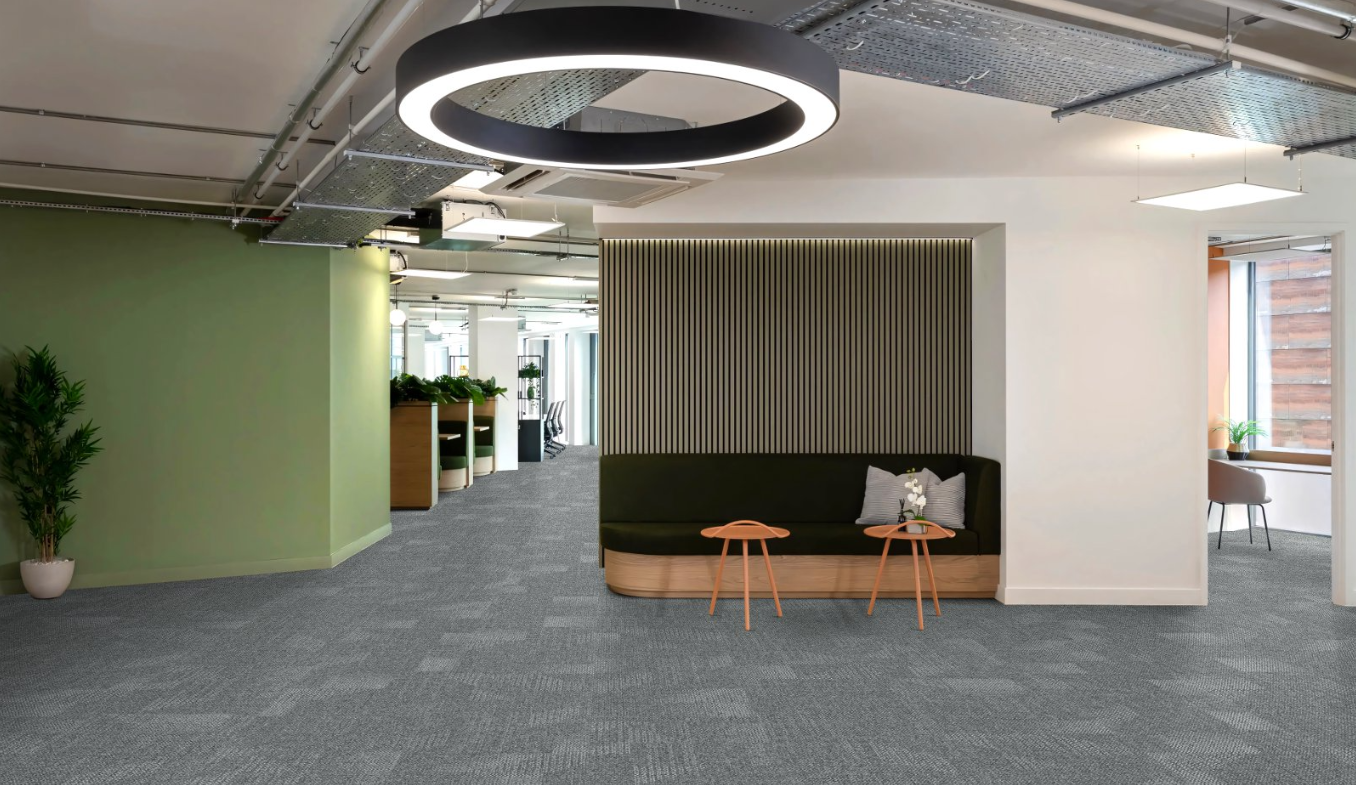
Reception Area: Create a Strong First Impression
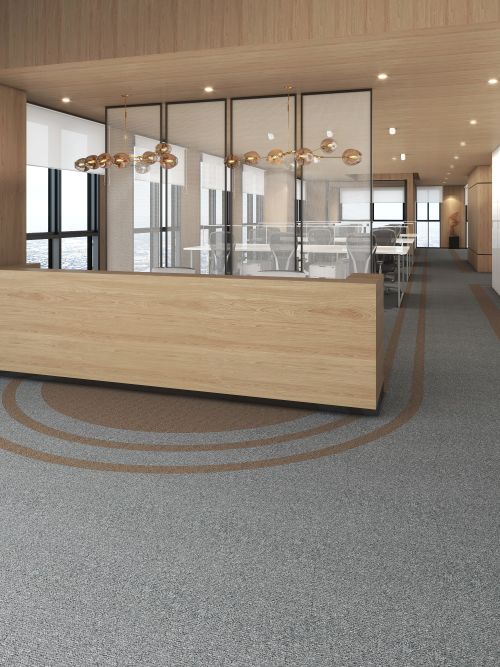
The reception area is often the first point of contact between a company and its visitors. For this space, carpet tiles should be visually refined while offering reliable durability and easy maintenance.KARATILE dense nylon carpet tiles are a suitable choice for reception areas, as they combine wear resistance with a clean, professional appearance. In terms of design, colors can be selected to echo the company’s brand palette, logo color, or overall interior concept. Simple geometric patterns or elegant tonal designs can also help create a polished and memorable entrance experience.
Open Office Area: Balance Performance and Practicality
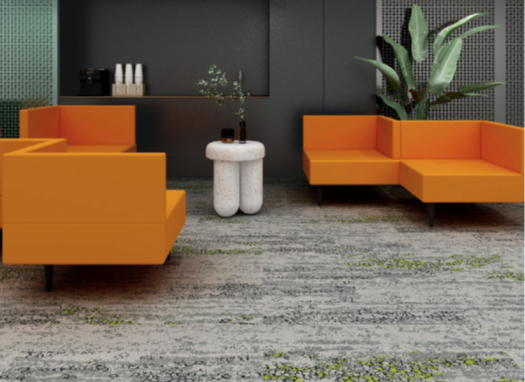
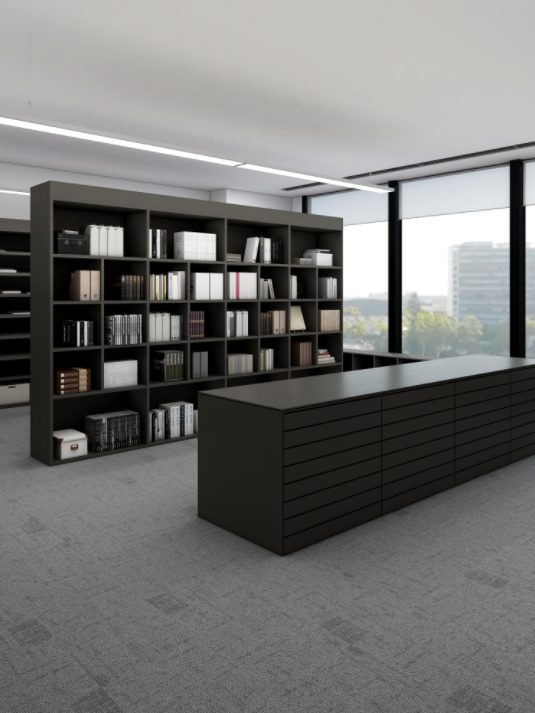
Open office areas usually cover larger spaces and experience frequent daily use. For this reason, carpet tiles in these zones need to perform well in terms of wear resistance, fire safety, and ease of maintenance.KARATILE PNMIX Series is designed for high-traffic office environments. With strong durability and B1-level fire resistance, it provides a practical flooring solution for everyday workplace use.
Neutral colors such as warm grey, medium grey, beige, and soft taupe are often recommended for open offices. These shades are easy to coordinate with office furniture, lighting, and wall finishes, while also helping the space look clean and organized over time.
Executive Offices and Meeting Rooms: Focus on Comfort and Atmosphere
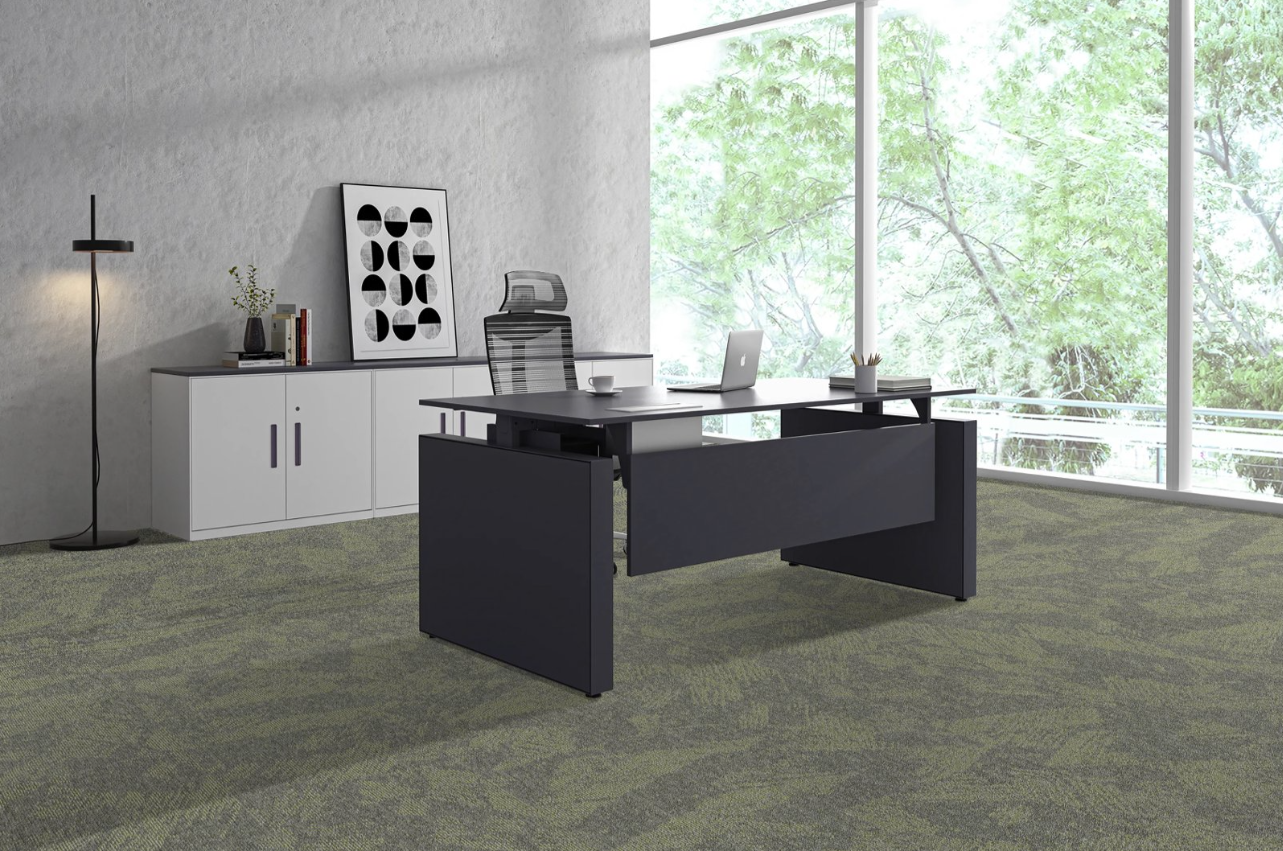
Executive offices and meeting rooms require a quieter, more comfortable, and more refined atmosphere. In these areas, flooring should not only look elegant but also contribute to acoustic comfort and a sense of calm.KARATILE TGFLEX eco-friendly soft backing carpet tiles offer a softer underfoot feel and good sound absorption, making them well suited for private offices, boardrooms, and meeting spaces.
For the color palette, natural textures, muted tones, and subtle organic patterns are recommended. These choices create visual depth without overwhelming the room, helping the space feel professional, composed, and inviting.
Corridors and Walkways: Prioritize Durability and Stability
Corridors and walkways are among the busiest areas in an office. Carpet tiles used in these spaces must withstand constant foot traffic while maintaining dimensional stability and a neat appearance.KARATILE reinforced PVC backing carpet tiles, paired with highly durable nylon surfaces, are a reliable option for these high-traffic zones. They offer strong wear resistance, stable installation, and easier cleaning for long-term daily use.
Color selection can follow the main tone of nearby work areas or public zones, helping corridors connect different spaces while maintaining a consistent design language.

Showrooms and Lounge Areas: Add Creativity and Character
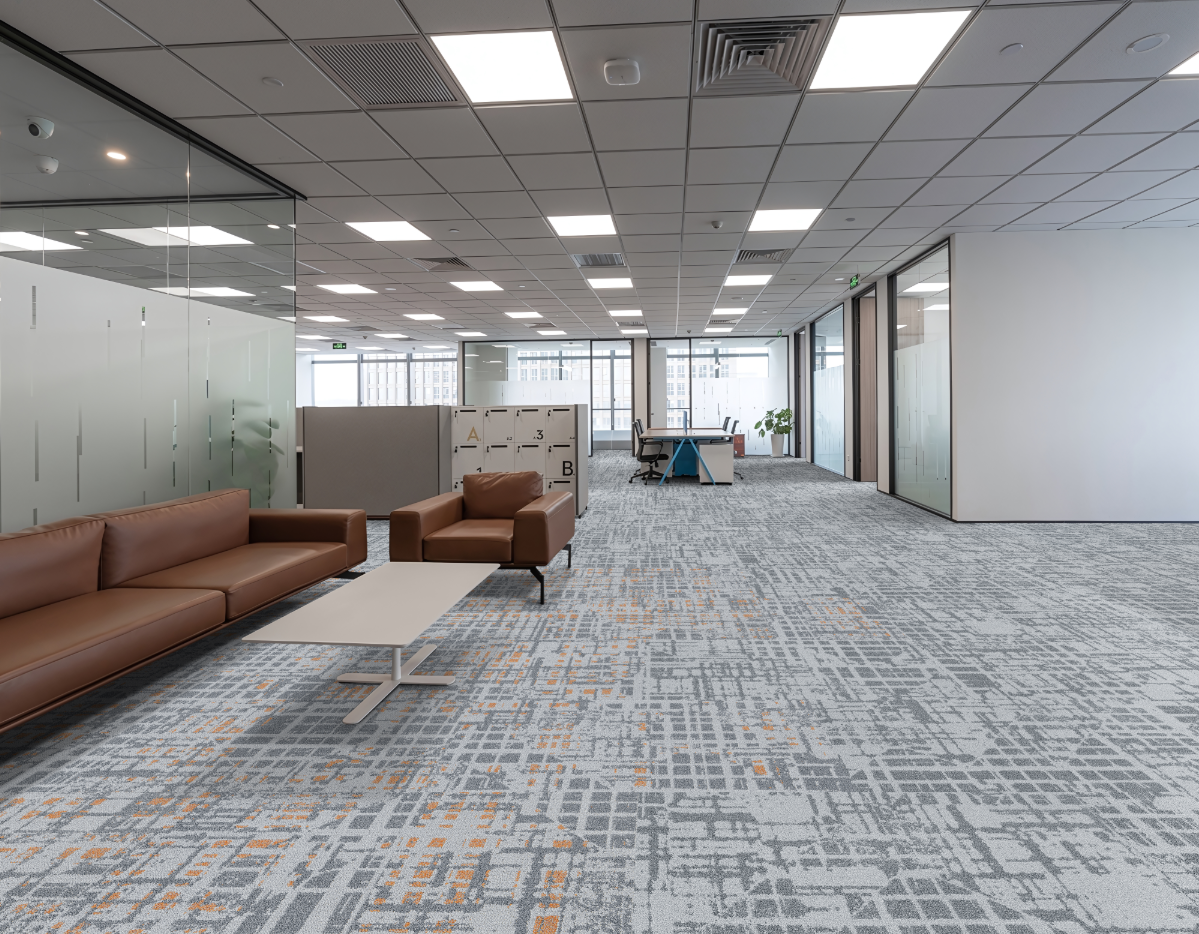
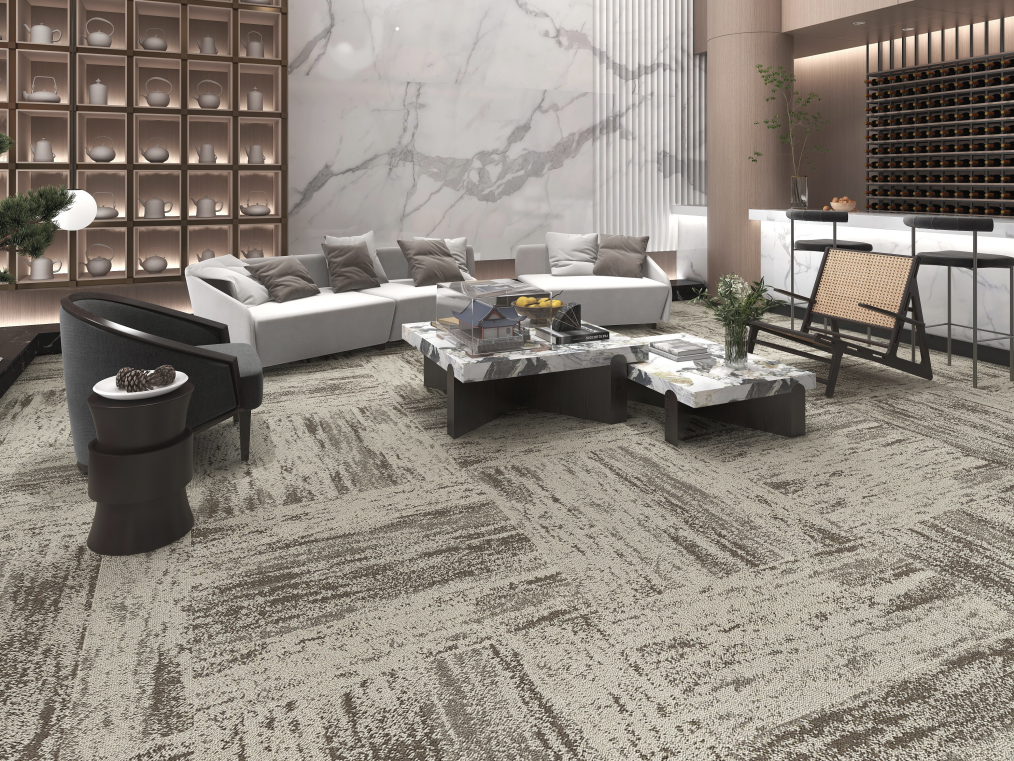
Showrooms, lounge areas, and collaborative spaces often allow more freedom in design. In these areas, carpet tiles can become an expressive design element rather than just a functional material.KARATILE TGLITE large-size jacquard soft backing carpet tiles offer a wide range of patterns and design possibilities. They are ideal for creating visual highlights, zoning open spaces, or adding a sense of creativity and personality to the interior.
Designers can use color, pattern, and installation layout to strengthen the identity of the space and create a more engaging experience for employees, clients, and visitors.
Finding the Right Carpet Tile Solution
Choosing carpet tiles for an office is not simply about selecting a color or pattern. It requires a clear understanding of how each space will be used. Reception areas need to support brand image. Open offices require practical durability. Executive rooms and meeting spaces benefit from comfort and acoustic performance. Corridors need stability and wear resistance. Showrooms and lounge areas provide opportunities for creative expression.
With more than 400 ready-to-ship patterns, KARATILE offers flexible carpet tile solutions for a wide range of office environments. From product performance to visual design, from daily use to long-term maintenance, KARATILE helps create professional workplace flooring solutions that begin from the ground up.
For procurement review
Decision comparison
| Decision | Verify | Risk if missed |
|---|---|---|
| Use zone | Traffic, castors, corridors and meetings | One specification for every area |
| Sample | Face, backing, edges, batch and joins | Good swatch, inconsistent project |
| Evidence | Data sheet, standard and test scope | Claims cannot support a tender |
| Cost | Waste, installation, care and replacement | Low price, high lifecycle cost |
Claim → Evidence
How claims map to evidence
ClaimThe product suits a project zone
EvidenceZone brief + product-specific data sheet + physical mock-up
ClaimThe option has a lower project cost
EvidenceLike-for-like material, waste, installation, care and replacement schedule
ClaimA performance requirement is met
EvidenceProduct-specific report naming the sample, method, date and result
When product-specific evidence is unavailable, retain the verification method and boundary instead of presenting an assumption as fact.
Process map
From question to delivery
- 01Define zonesArea, traffic and schedule
- 02Set criteriaConstruction, size, colour and backing
- 03Validate samplesPhysical sample, seams and reports
- 04Issue the scheduleQuantity, waste, lead time and responsibilities
Retain samples, specifications or approval records at every step so decisions survive the handoff from design to procurement and installation.
FAQ
Frequently asked questions
What should be checked first for “How to Choose Carpet Tiles for Different Office Areas”?
Confirm the relevant zones, intensity, schedule, budget and maintenance conditions, then verify each conclusion against physical samples, the exact data sheet and valid evidence.
What information is needed before requesting a quote?
Provide the project city, total area, zones, schedule, subfloor, target budget and preferred colours or formats.
Why is price per square metre not enough?
Lifecycle cost also includes waste, accessories, installation, downtime, cleaning and future local replacement.
What is commonly missed during sample approval?
Check backing, edges, thickness, seam appearance, production batch and the exact products covered by test reports—not colour alone.
Evidence and further reading
Sources
China official / standards
- GB 18586—2026 国家标准信息standard
International research / technical sources
- Interface:模块地毯和可持续发展brand
References support standard status, industry methods or design context and do not endorse every third-party claim.
Continue reading
More from this decision path
 Why Offices Choose Modular Carpet Tiles: A Buyer’s Decision Guide
 Custom Modular Carpet Manufacturer - Precise Design Reproduction from Samples & Drawings
 Carpet Tile vs. Broadloom: How to Choose for a Modern Office
Internal knowledge links
From knowledge to products and applications
Next step
Get a project-specific recommendation
Share project city, area, zones, schedule, budget and reference images for a response using the same decision model.