
Broadloom Knowledge · KARATILE B2B Flooring Knowledge
Carpet Tile vs. Broadloom: How to Choose for a Modern Office
For “Carpet Tile vs. Broadloom: How to Choose for a Modern Office”, do not rely on one material name, number or marketing claim. Build a selection checklist tha
Direct answer
What decision does this article support?
For “Carpet Tile vs. Broadloom: How to Choose for a Modern Office”, do not rely on one material name, number or marketing claim. Build a selection checklist that design, procurement, installation and suppliers can review together. The decision must trace to project conditions, samples and product-specific evidence.
This guide is for corporate procurement/facilities, interior designers, project managers working together during comparison, project review or pre-delivery checks. Use it with the actual zones, traffic, schedule, budget and available documents.
Build a selection checklist that design, procurement, installation and suppliers can review together.Ready for project review
Key takeaways
- 01
When evaluating “Carpet Tile vs. Broadloom: How to Choose for a Modern Office”, first document the zones, traffic, schedule and maintenance assumptions.
- 02
Samples, data sheets and test evidence must refer to the same product.
- 03
Compare waste, installation, care and local replacement—not unit price alone.
- 04
Record the decision in the product schedule, approved sample and handover requirements.
Answer blocks
Turn the core question into actionable answers
What should be checked first for “Carpet Tile vs. Broadloom: How to Choose for a Modern Office”?
Confirm the relevant zones, intensity, schedule, budget and maintenance conditions, then verify each conclusion against physical samples, the exact data sheet and valid evidence.
How can options be compared fairly?
Use the same fields for construction, format, backing, colours, sample batch, evidence scope, lead time, waste and care.
When is a procurement decision ready?
Approve design intent, project criteria, product-specific evidence and a physical mock-up before issuing the written schedule.
Choosing the right flooring for your commercial space might not top your priority list—but it should. The decision between carpet tiles and traditional broadloom (wall-to-wall) carpet often leaves facility managers questioning: Which delivers better ROI? Which minimizes disruption? Which reduces long-term headaches?
The answer boils down to one word: flexibility.
Installation: Modular Assembly vs Complex Roll-Out
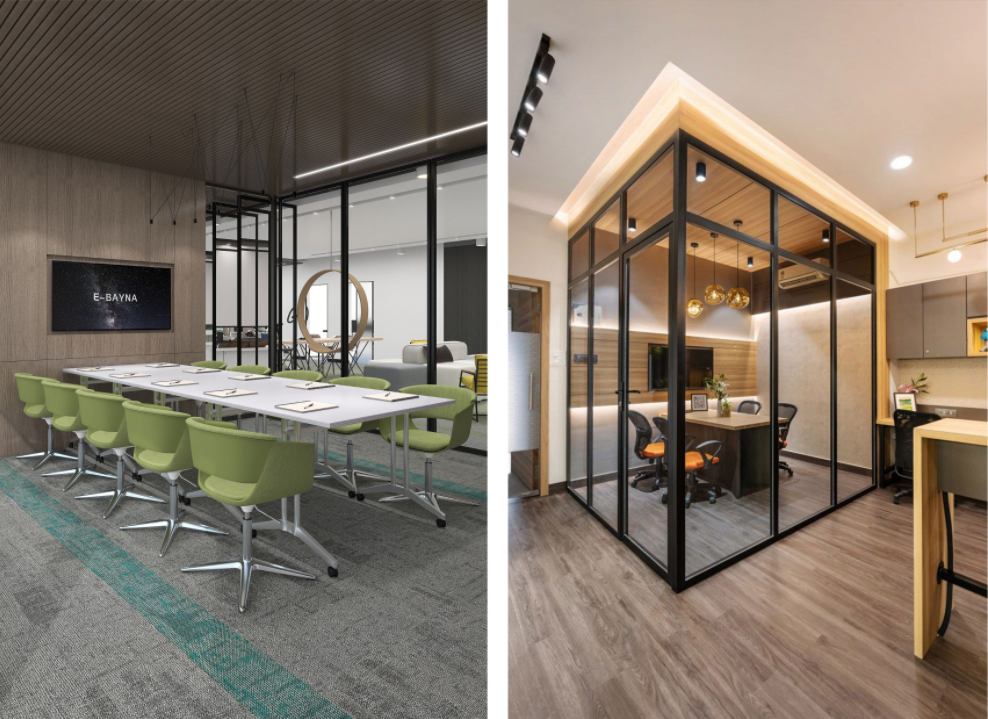
Installing carpet tiles is like assembling a puzzle. These modular carpet squares arrive with integrated backing and install directly onto your subfloor with minimal cutting—no separate underlay required. Many modern office carpet tiles even support glue-free installation, letting your team replace indiv>
Broadloom carpet, by contrast, demands professional crews to roll out 12-foot-wide sheets, stretch, seam, and glue entire sections. This process is time-intensive, disruptive, and often requires moving all furniture out of the space.
Maintenance Economics: Spot Replacement vs. Full Redo
In high-traffic commercial environments, wear is inevitable—think coffee spills in the break room or chair indentations in workstations. With modular carpet tiles, you simply lift and replace the affected squares. This keeps maintenance costs low, reduces waste, and supports sustainability goals.
When broadloom carpet suffers damage, you're looking at a costly, full-room replacement that interrupts operations and inflates your facility budget.
Practical Applications: Why Commercial Spaces Are Going Modular
While broadloom remains viable for designs requiring seamless, continuous patterns, most modern offices, coworking spaces, and retail environments now default to modular carpet solutions. The design flexibility—combining colors, patterns, and even carpet planks (rectangular tiles)—lets brands create custom layouts that reflect their identity.
KARATILE Carpets: experience since 1997
As a leading Chinese carpet tile factory with experience since 1997 in commercial carpet tile manufacturing, KARATILE doesn't compete on price alone. We deliver verified performance data:
- Unmatched Durability: Our nylon carpet tile options achieve tuft bind strength of 36.7N—far exceeding industry standards for heavy commercial use.
- Fire Safety: Both flagship series meet B1-grade flame retardancy, making them ideal for public buildings and corporate headquarters.
- Superior Indoor Air Quality: product-specific formaldehyde evidence with TVOC performance must be checked against the test report for the exact product and sample. Occupancy timing must also consider adhesives, installation conditions and indoor-air acceptance.
- Design Versatility: Choose from a broad pattern range subject to current stock confirmation in PP carpet tile, polyester carpet tile, and premium nylon constructions. Whether you need square carpet formats or elongated carpet plank designs, our library refreshes quarterly to match evolving workplace aesthetics.
Material Selection: Matching Fiber to Function
Not all carpet tiles are equal. Our PP carpet tile lines offer cost-effective, stain-resistant solutions for budget-conscious projects. Polyester carpet tile delivers vibrant color clarity for branding-focused spaces. For maximum resilience in 24/7 facilities, our nylon carpet tile products—produced at our certified carpet tile factory—provide the longest lifecycle and best elastic recovery.
The Bottom Line
Selecting flooring is a strategic decision, not just a design choice. With experience since 1997 on office carpet tile innovation, KARATILE helps facility managers, architects, and procurement teams make decisions backed by data, not marketing claims. When your workspace needs to adapt quickly while controlling total cost of ownership, modular carpet delivers.
Ready to specify? Contact KARATILE for performance samples and technical specifications tailored to your next project.
For procurement review
Decision comparison
| Decision | Verify | Risk if missed |
|---|---|---|
| Use zone | Traffic, castors, corridors and meetings | One specification for every area |
| Sample | Face, backing, edges, batch and joins | Good swatch, inconsistent project |
| Evidence | Data sheet, standard and test scope | Claims cannot support a tender |
| Cost | Waste, installation, care and replacement | Low price, high lifecycle cost |
Claim → Evidence
How claims map to evidence
ClaimThe product suits a project zone
EvidenceZone brief + product-specific data sheet + physical mock-up
ClaimThe option has a lower project cost
EvidenceLike-for-like material, waste, installation, care and replacement schedule
ClaimA performance requirement is met
EvidenceProduct-specific report naming the sample, method, date and result
When product-specific evidence is unavailable, retain the verification method and boundary instead of presenting an assumption as fact.
Process map
From question to delivery
- 01Define zonesArea, traffic and schedule
- 02Set criteriaConstruction, size, colour and backing
- 03Validate samplesPhysical sample, seams and reports
- 04Issue the scheduleQuantity, waste, lead time and responsibilities
Retain samples, specifications or approval records at every step so decisions survive the handoff from design to procurement and installation.
FAQ
Frequently asked questions
What should be checked first for “Carpet Tile vs. Broadloom: How to Choose for a Modern Office”?
Confirm the relevant zones, intensity, schedule, budget and maintenance conditions, then verify each conclusion against physical samples, the exact data sheet and valid evidence.
What information is needed before requesting a quote?
Provide the project city, total area, zones, schedule, subfloor, target budget and preferred colours or formats.
Why is price per square metre not enough?
Lifecycle cost also includes waste, accessories, installation, downtime, cleaning and future local replacement.
What is commonly missed during sample approval?
Check backing, edges, thickness, seam appearance, production batch and the exact products covered by test reports—not colour alone.
Evidence and further reading
Sources
China official / standards
- GB 18586—2026 国家标准信息standard
International research / technical sources
- Interface:模块地毯和可持续发展brand
References support standard status, industry methods or design context and do not endorse every third-party claim.
Continue reading
More from this decision path
 Why Offices Choose Modular Carpet Tiles: A Buyer’s Decision Guide
 Custom Modular Carpet Manufacturer - Precise Design Reproduction from Samples & Drawings
 How to Evaluate a Carpet Tile Sample Before Installation
Internal knowledge links
From knowledge to products and applications
Next step
Get a project-specific recommendation
Share project city, area, zones, schedule, budget and reference images for a response using the same decision model.