
Carpet Fibres & Materials · KARATILE B2B Flooring Knowledge
Gradient Carpet Tile Design: Colour Matrices and Project Delivery
For “Gradient Carpet Tile Design: Colour Matrices and Project Delivery”, do not rely on one material name, number or marketing claim. Turn a spatial concept int
Direct answer
What decision does this article support?
For “Gradient Carpet Tile Design: Colour Matrices and Project Delivery”, do not rely on one material name, number or marketing claim. Turn a spatial concept into a floor language that can be sampled, laid out and handed over. The decision must trace to project conditions, samples and product-specific evidence.
This guide is for interior designers, architects, brand-space leads working together during comparison, project review or pre-delivery checks. Use it with the actual zones, traffic, schedule, budget and available documents.
Turn a spatial concept into a floor language that can be sampled, laid out and handed over.Ready for project review
Key takeaways
- 01
When evaluating “Gradient Carpet Tile Design: Colour Matrices and Project Delivery”, first document the zones, traffic, schedule and maintenance assumptions.
- 02
Direction, proportion and rhythm can differentiate spaces within one collection.
- 03
Renderings shortlist options; physical samples under project lighting approve them.
- 04
Complex layouts need agreed modules, datums, edges and waste allowances.
Answer blocks
Turn the core question into actionable answers
What should be checked first for “Gradient Carpet Tile Design: Colour Matrices and Project Delivery”?
Confirm the relevant zones, intensity, schedule, budget and maintenance conditions, then verify each conclusion against physical samples, the exact data sheet and valid evidence.
How are colour and texture controlled?
Set base, secondary and accent ratios, align texture scale and direction, then check colour and repetition in a larger mock-up.
How does design transfer to installation?
Issue coded products, layout, arrows, datums, edge details, waste and approved-sample references—not a rendering alone.
Struggling with abrupt color transitions and mismatched aesthetics when using gradient carpets in office environments? KARATILE introduces a professional modular carpet tile system comprising three curated collections—PJ Gradient Squares, DQ Gradient Planks, and PJL Accent Planks—designed to systematically resolve common gradient flooring integration issues and deliver naturally sophisticated visual results for modern workspaces.
Core Advantages of the KARATILE Matrix
1. Comprehensive Greyscale Progressions for Seamless Transitions
Addressing the industry's limited greyscale options and harsh tonal jumps, our PJ series offers an exceptional 9-level greyscale gradient. From light grey to deep charcoal, each shade progresses with subtle precision, creating fluid transitions reminiscent of natural light and shadow. This eliminates visual "breaks" and establishes a premium gradient foundation essential for high-end commercial carpet tile installations.2. Complete Color System for Flexible Coordination
The PJL color system features meticulously crafted gradient progressions and linear density patterns for every hue, creating inherent harmony with greyscale tones. Whether executing grey-to-color transitions or pure color progressions, the system ensures uniform color distribution and naturally seamless integration across all modular carpet configurations.3. Consistent Yarn Excellence for Unified Texture
Both Nylon carpet tile and select color variants across PJ, DQ, and PJL collections utilize premium solution-dyed nylon from the same yarn source. This manufacturing consistency guarantees identical color texture and performance characteristics, enabling different carpet tile formats to combine with cohesive, unified aesthetics—a hallmark of our Chinese carpet tile factory quality standards.Three Collections, Multiple Spatial Solutions
PJ Series (50×50cm Gradient Carpet Squares)
These square carpet modules function like design building blocks, with each carpet tile displaying a complete gradient pattern. Ideal for creating artistic floorscapes and creative patchwork designs throughout open-plan offices.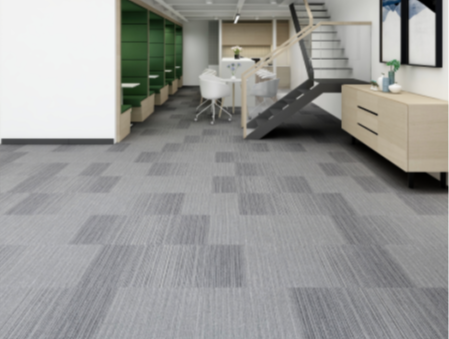
DQ Series (25×100cm Gradient Carpet Planks)
Extracting 5 core gradients from the PJ palette, this modular carpet tile collection uses elongated plank formats to extend visual depth through linear perspective. The "gradient-mix" installation method creates rhythmic, flowing transitions perfect for corridors, walkways, and transitional office zones requiring directional flow.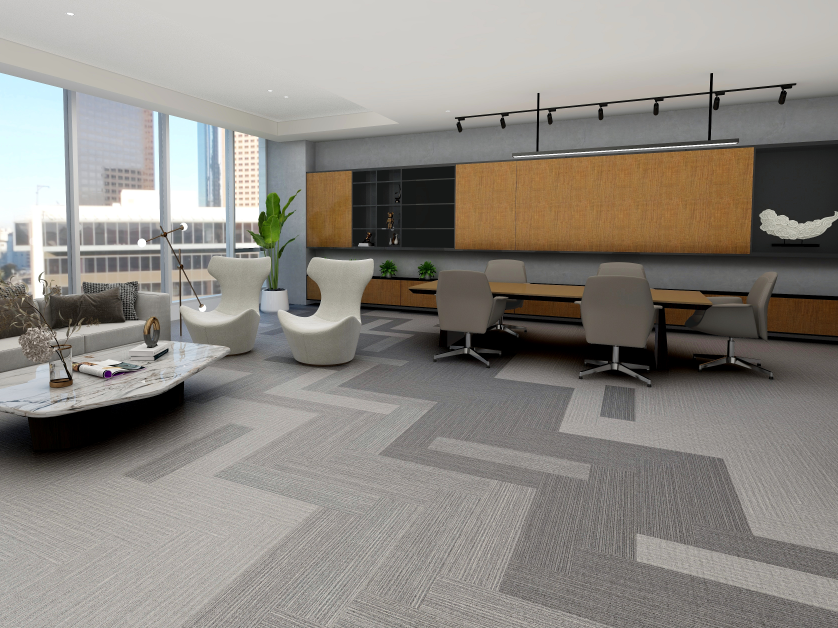
PJL Series (25×100cm Linear Accent Carpet Planks)
Featuring a signature medium-grey base from our PJ series, this collection integrates 8 trending colors with varied linear density patterns. An excellent choice for adding branded visual interest to reception areas, feature walls, and collaborative spaces while maintaining professional sophistication.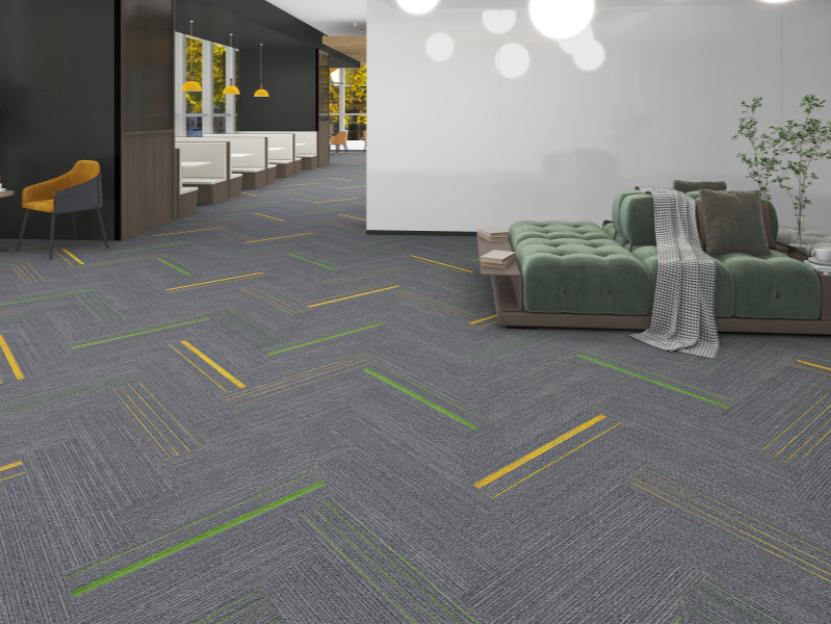
From individual workspaces to high-traffic circulation paths, KARATILE's office carpet tile matrix empowers architects and designers to construct layered, brand-specific environments with architectural precision.
Ready to transform your commercial space? Contact the KARATILE design team for tailored modular carpet tile recommendations that elevate your office aesthetic while solving complex gradient challenges. Our PP carpet tile and polyester carpet tile options provide additional material flexibility for diverse project requirements.
For procurement review
Decision comparison
| Goal | Floor strategy | Validate on site |
|---|---|---|
| Focus | Low contrast and continuous texture | Workstation view and glare |
| Collaboration | Colour zoning or direction shifts | Meeting boundaries and circulation |
| Wayfinding | Colour bands, texture or modular rhythm | Recognition from entry to destination |
| Brand | Control base and accent ratios | Colour under light and at scale |
Claim → Evidence
How claims map to evidence
ClaimThe scheme supports spatial zoning
EvidenceFunction/circulation plan + floor layout + site observation
ClaimColour and texture suit the project
EvidencePhysical colour and larger mock-up under project lighting
ClaimA complex pattern can be delivered
EvidenceModule, direction, datum, edge and waste instructions
When product-specific evidence is unavailable, retain the verification method and boundary instead of presenting an assumption as fact.
Process map
From question to delivery
- 01Read the spaceFunction, circulation, acoustics and brand
- 02Build the floor languageBase colour, accents, texture and scale
- 03Plan modulesDirection, edges and material transitions
- 04Mock up on siteApprove under real light and retain a control sample
Retain samples, specifications or approval records at every step so decisions survive the handoff from design to procurement and installation.
FAQ
Frequently asked questions
What should be checked first for “Gradient Carpet Tile Design: Colour Matrices and Project Delivery”?
Confirm the relevant zones, intensity, schedule, budget and maintenance conditions, then verify each conclusion against physical samples, the exact data sheet and valid evidence.
Must an office use one carpet throughout?
No. A consistent collection can use colour, texture or installation direction to distinguish focus, collaboration, circulation and reception zones.
Why can a rendering not replace a physical sample?
Screen colour, project lighting, viewing distance and installed scale all change perception. Renderings shortlist; samples approve.
How can complex patterns be delivered reliably?
Fix the module, datum lines, tile arrows, edge details and waste allowance, then approve a small layout mock-up.
Evidence and further reading
Sources
International research / technical sources
- JLL:2026 全球空间设计趋势research
- Tarkett:2026 商用地板流行趋势brand
- Shaw Contract:设计中心brand
References support standard status, industry methods or design context and do not endorse every third-party claim.
Continue reading
More from this decision path
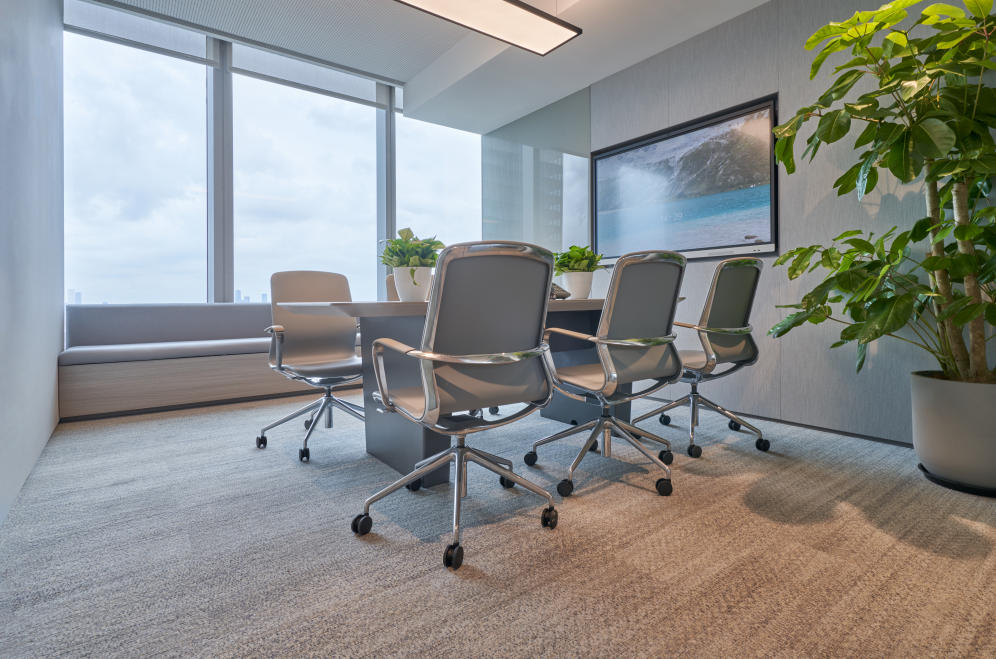 Carpet Tile Aesthetics: How Colour, Pattern and Modularity Shape Commercial Spaces
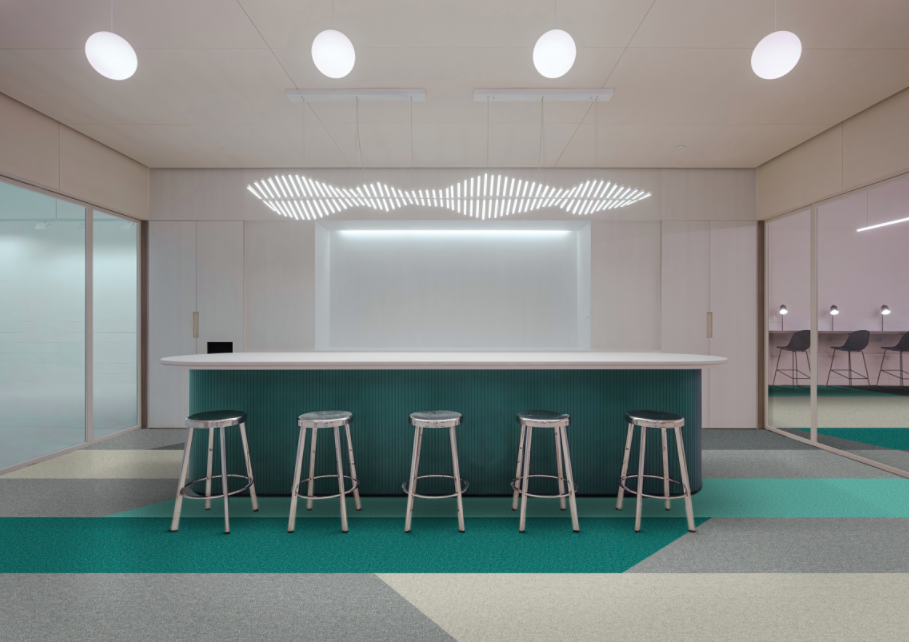 Beyond Gray: 33 Colors Redefining Office Carpet Tiles
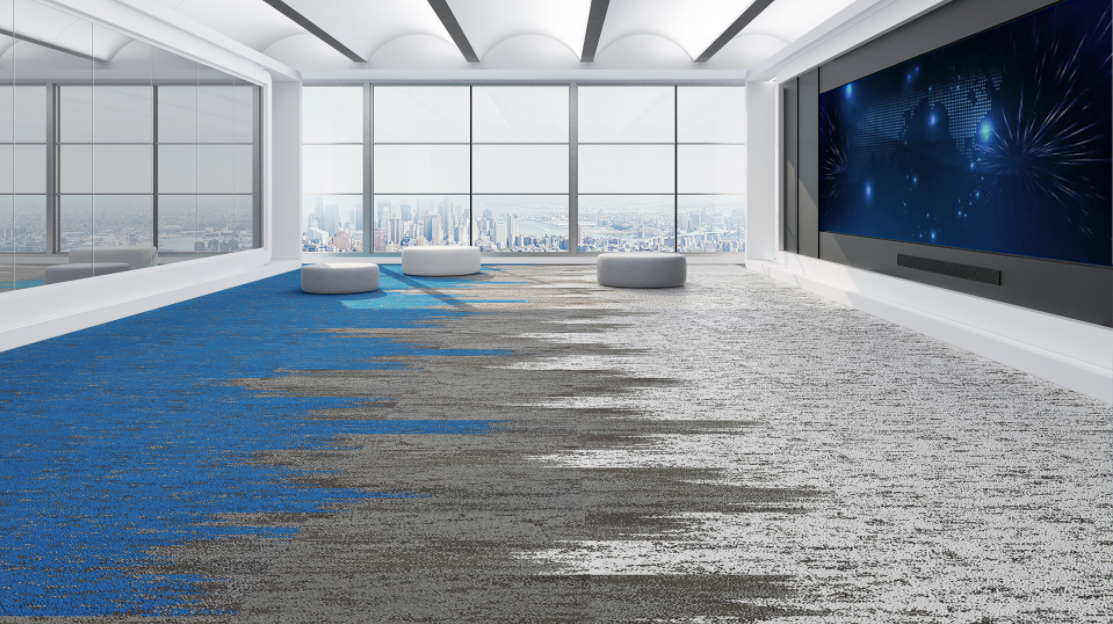 Architect-Inspired Palettes: Using Carpet to Build Spatial Atmospheres
Internal knowledge links
From knowledge to products and applications
Next step
Request colour cards and layout support
Share project city, area, zones, schedule, budget and reference images for a response using the same decision model.