
Indoor Environment & Health · KARATILE B2B Flooring Knowledge
How to Evaluate TVOC and Indoor-Air Evidence for Carpet Tiles
For “How to Evaluate TVOC and Indoor-Air Evidence for Carpet Tiles”, do not rely on one material name, number or marketing claim. Separate current requirements,
Direct answer
What decision does this article support?
For “How to Evaluate TVOC and Indoor-Air Evidence for Carpet Tiles”, do not rely on one material name, number or marketing claim. Separate current requirements, forthcoming requirements and voluntary claims, then tie each conclusion to a product and valid document. The decision must trace to project conditions, samples and product-specific evidence.
This guide is for EHS/ESG teams, quality leads, procurement reviewers working together during comparison, project review or pre-delivery checks. Use it with the actual zones, traffic, schedule, budget and available documents.
Separate current requirements, forthcoming requirements and voluntary claims, then tie each conclusion to a product and valid document.Ready for project review
Key takeaways
- 01
When evaluating “How to Evaluate TVOC and Indoor-Air Evidence for Carpet Tiles”, first document the zones, traffic, schedule and maintenance assumptions.
- 02
Match report sample, product code, method, date and result.
- 03
EPDs, certifications and harmful-substance tests answer different questions.
- 04
GB 18586—2026 is published and takes effect on 1 October 2027.
Answer blocks
Turn the core question into actionable answers
What should be checked first for “How to Evaluate TVOC and Indoor-Air Evidence for Carpet Tiles”?
Confirm the relevant zones, intensity, schedule, budget and maintenance conditions, then verify each conclusion against physical samples, the exact data sheet and valid evidence.
What can one test report establish?
It records the result for a named submitted sample under stated methods and conditions; it does not automatically cover other products, batches or long-term room air.
How should procurement documents handle this?
Name the applicable version and timing, require product-specific reports with valid details, and set a review point during the transition.
When facility managers evaluate flooring options, formaldehyde gets all the attention. But the real "invisible pollutant" compromising indoor air quality in offices, hotels, and commercial buildings is TVOC—Total Volatile Organic Compounds. These emissions from modular carpet installations can impact occupant health for years.
Here's a practical, three-step specification guide for architects and procurement teams sourcing carpet tile from manufacturers:
Step 1: Specify Solution-Dyed Yarns from the Start
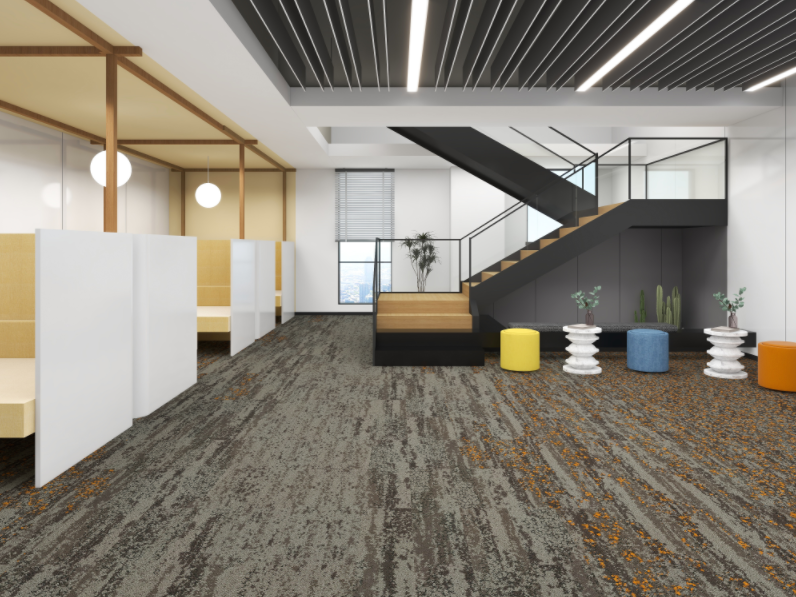
Post-dyed carpet fibers require chemical baths that significantly increase TVOC emissions. Leading Chinese carpet tile factories now use solution-dyed nylon carpet tile and polyester carpet tile production methods, where pigment is added during the extrusion process—eliminating post-production chemical residue. This isn't just a technical detail; it's the single most important decision for low-emission modular carpet.Step 2: Scrutinize Every Layer of the Carpet Square
A truly low-VOC carpet square demands clean materials throughout:Backing Systems: Premium PVC backing formulations can achieve TVOC performance must be checked against the test report for the exact product and sample. For sustainable projects, TGLITE ultra-light soft backing—made from recycled textile waste (about one T-shirt per square meter of carpet tile)—delivers both performance and LEED points.
Core Construction: The middle layer matters. Eco-latex cores, similar to materials used in certified bedding products, maintain tuft bind strength in commercial carpet tile while adding negligible TVOC load.
Format Flexibility: Whether you're specifying 50×50 cm carpet squares, rectangular carpet planks for directional designs, or broadloom conversion pieces, the material chemistry should remain consistent.
Step 3: Insist on Certifications, Not Just Claims
For any PP carpet tile, nylon carpet tile, or polyester carpet tile, demand third-party validation:Green Label Plus (CRI Standard)
EPD (Environmental Product Declaration)
CDPH/EHLB Standard Method V1.2 for low-emissions
These certifications transform vague marketing promises into verifiable data. Reputable carpet tile factories—whether producing office carpet tile or hospitality-grade modular carpet—will provide complete transparency.
The Bottom Line
Choosing low-VOC carpet tile doesn't require compromises on design or durability. From solution-dyed yarns in our nylon carpet tile collections to recycled-content backing in our commercial carpet tile lines, we control emissions at every production stage. Because specifications should protect both building occupants and your professional reputation.
About KARATILE Carpet Tile Factory
As a specialized manufacturer of modular carpet tile in China, we produce solution-dyed PP carpet tile, polyester carpet tile, and nylon carpet tile for global commercial projects. Our ISO-certified carpet tile factory delivers both custom carpet plank designs and stock carpet square programs with full VOC transparency.For procurement review
Decision comparison
| Evidence | What it establishes | What it does not replace |
|---|---|---|
| Standard status | Version and effective date | A product-specific pass result |
| Test report | Result for the submitted sample and method | Uncovered products or long-term room air results |
| EPD | Lifecycle environmental information | Indoor air test report |
| Certification/label | Assessment under a scheme | Buyer verification of scope |
Claim → Evidence
How claims map to evidence
ClaimA standard currently applies
EvidenceStatus and effective date on the national standards platform
ClaimA product meets a limit
EvidenceComplete, valid test report matching the delivered product
ClaimProject indoor air meets its target
EvidenceMaterial documents do not replace project-level post-completion acceptance
When product-specific evidence is unavailable, retain the verification method and boundary instead of presenting an assumption as fact.
Process map
From question to delivery
- 01Confirm requirementsLocation, use and effective date
- 02List evidenceStandards, reports, EPDs and certifications
- 03Match scopeProduct, sample, method, date and result
- 04Retain recordsContract schedules, delivered batches and site records
Retain samples, specifications or approval records at every step so decisions survive the handoff from design to procurement and installation.
FAQ
Frequently asked questions
What should be checked first for “How to Evaluate TVOC and Indoor-Air Evidence for Carpet Tiles”?
Confirm the relevant zones, intensity, schedule, budget and maintenance conditions, then verify each conclusion against physical samples, the exact data sheet and valid evidence.
Is GB 18586—2026 already mandatory?
Not yet. The official platform lists publication on 31 March 2026 and implementation on 1 October 2027. Procurement documents should name the version and timing.
Is a formaldehyde pass enough?
No. Check all applicable items such as TVOC, along with the method, unit, product code and report scope.
Is an EPD the same as a product compliance certificate?
No. An EPD discloses lifecycle environmental impacts; harmful-substance compliance requires the applicable standard and test evidence.
Evidence and further reading
Sources
China official / standards
- GB 18586—2026 国家标准信息standard
- 市场监管总局:地毯地板强制性国家标准发布government
International research / technical sources
- Interface:环保产品声明 EPDbrand
References support standard status, industry methods or design context and do not endorse every third-party claim.
Continue reading
More from this decision path
 How Procurement Teams Should Evaluate Formaldehyde and TVOC in Carpet
Internal knowledge links
From knowledge to products and applications
Next step
Request product-specific compliance evidence
Share project city, area, zones, schedule, budget and reference images for a response using the same decision model.